Rhythm Review

Understand the essential cardiac rhythms for ACLS: cardiac arrest rhythms, tachyarrhythmias, and bradyarrhythmias.

Rhythm Review: Understanding Cardiac Rhythms in ACLS

Advanced Cardiovascular Life Support (ACLS) is an essential area of Medicine that empowers healthcare professionals to act quickly and efficiently in cardiac emergencies. One of the pillars of the ACLS protocol, following the guidelines of the AHA ACLS and renowned institutions such as Dante Pazzanese, is the recognition of cardiac rhythms. In this educational content, we will explore cardiac arrest rhythms in a didactic, practical way, aligned with what you need to know for the ACLS course, the ACLS exam, or the ACLS test. If you are looking for reliable material, including an ACLS PDF, for your ACLS 2025 certification, this article is for you!

Cardiac Arrest Rhythms: The 4 Essential Categories

In a cardiac arrest, rhythms are organized into four major groups:

  • Ventricular Fibrillation (VF)
  • Pulseless Ventricular Tachycardia (Pulseless VT)
  • Pulseless Electrical Activity (PEA)
  • Asystole

These are the pillars of the ACLS algorithm, and understanding them is crucial for anyone working in advanced life support.

Let us detail each one of them in a clear and practical way.

Shockable Rhythms: VF and Pulseless VT

Shockable rhythms are those in which defibrillation is the primary intervention. We are talking about VF and Pulseless VT. But how do you differentiate them? The right question is: "In this rhythm, does the pattern repeat?"

Ventricular Fibrillation (VF)

Here, the answer is no. The tracing on the monitor is chaotic, with no repetitive pattern. The heart is in a state of electrical disarray, unable to pump blood.
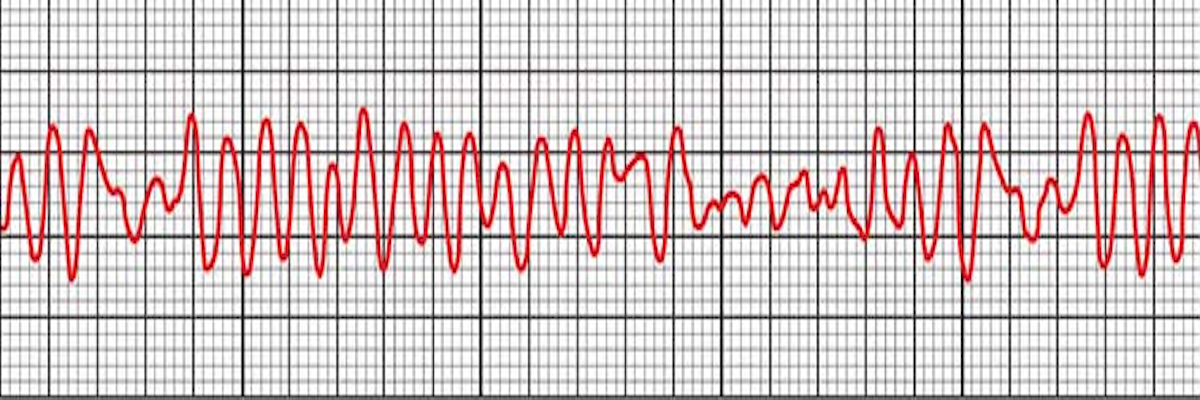
Ventricular-Fibrillation

Ventricular Fibrillation -- the pattern does not repeat.

Pulseless Ventricular Tachycardia (Pulseless VT)

Here, the answer is yes. The tracing shows a repetitive pattern, with wide QRS complexes following one another rapidly. It is a ventricular tachycardia that, in a cardiac arrest, does not generate a pulse.
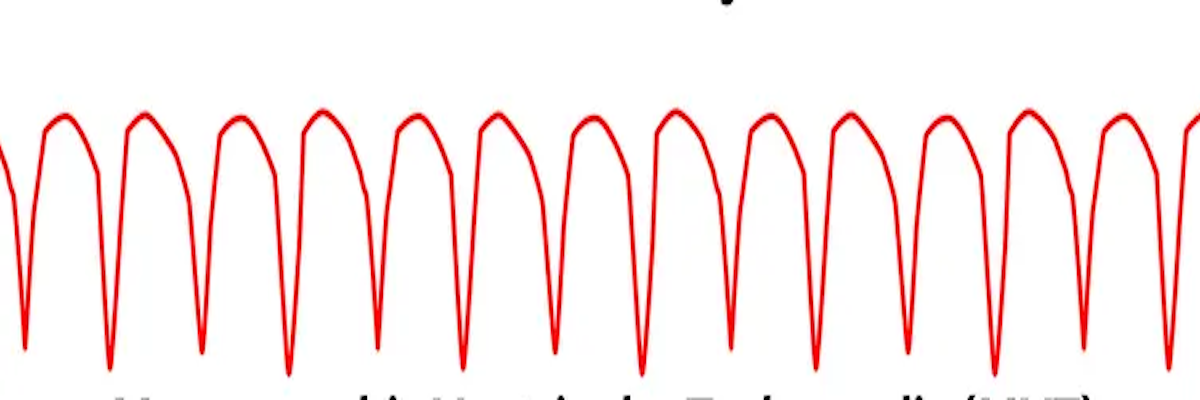
Pulseless Ventricular Tachycardia

Ventricular Tachycardia -- wide QRS and the pattern repeats.

Bonus: Polymorphic Ventricular Tachycardia and Torsades de Pointes

What about polymorphic VT? It is worth discussing because students always have questions. Ventricular Fibrillation is a subtype of polymorphic VT -- did you know that? Just like the famous Torsades de Pointes, which is also a subtype of polymorphic VT, but has a characteristic undulating pattern, like a "dance" on the monitor. In cardiac arrest, if there is no pulse, all rhythms where the pattern does not repeat are treated as VF, since in VF, the pattern does not repeat.
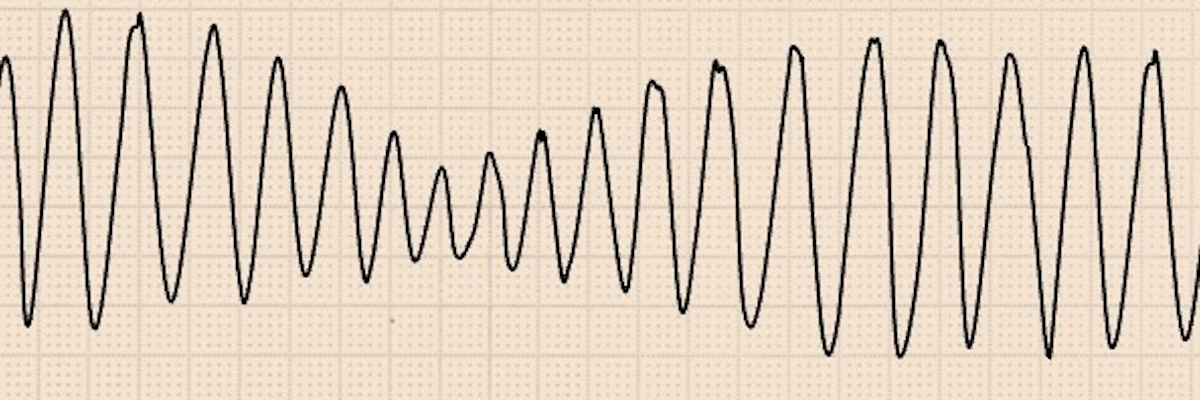
Torsades de Pointes

Torsades de Pointes -- the pattern does not repeat. Treat as VF.

The ECG above is a Torsades de Pointes. In a cardiac arrest, what is the question that matters? Does the pattern repeat? No? Then treat as VF and defibrillate the patient.

What is the right question again?

IN THIS RHYTHM, DOES THE PATTERN REPEAT?

  • Yes - VT
  • No - VF

VF or Pulseless VT? Never get it wrong again with this algorithm
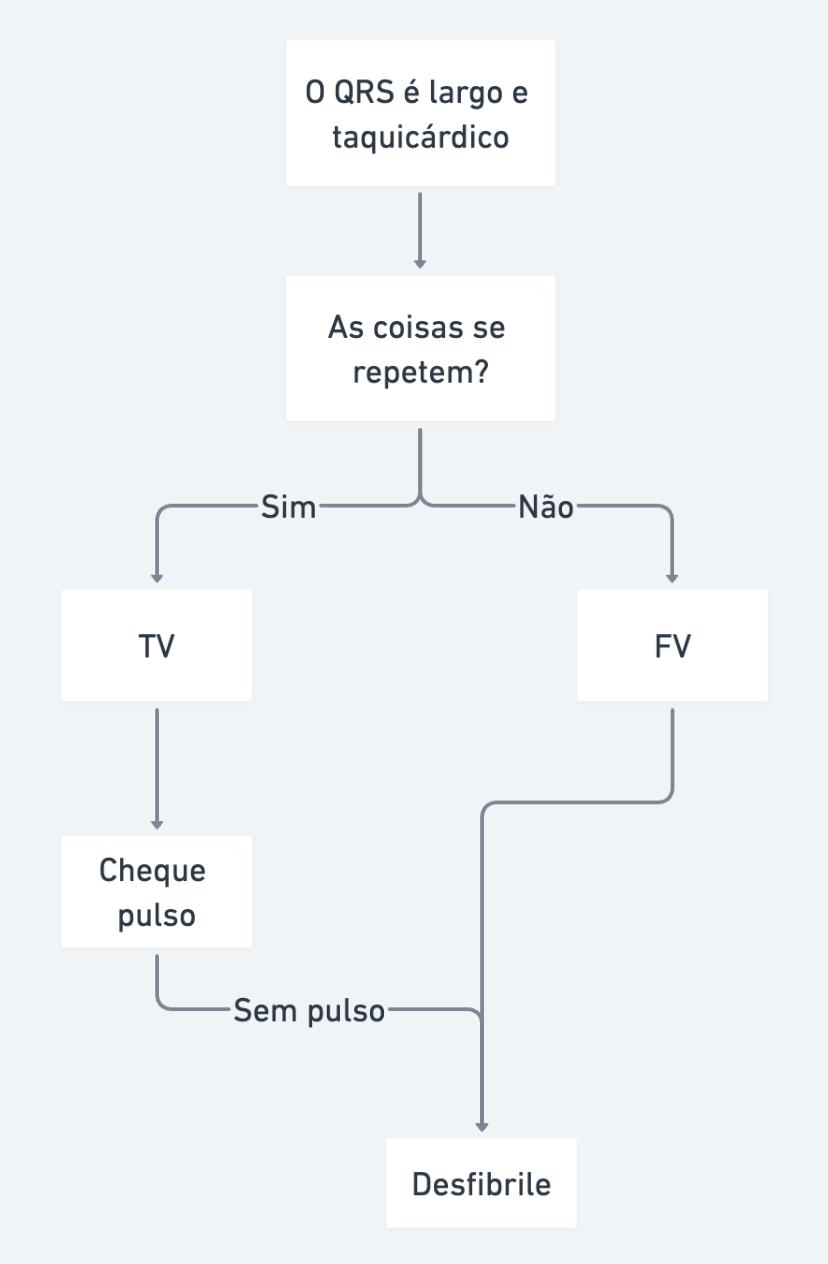
VF or Pulseless VT? Never get it wrong again with this algorithm
Management

In shockable rhythms, the focus of the ACLS protocol is immediate defibrillation. Just remember: in Ventricular Tachycardia, if there is a pulse, it is not cardiac arrest -- the approach changes. That is why, in the context of cardiac arrest, we call it Pulseless VT.

Non-Shockable Rhythms: PEA and Asystole

Now, let us move on to the rhythms where shock is not the solution: PEA and Asystole.

Pulseless Electrical Activity (PEA)

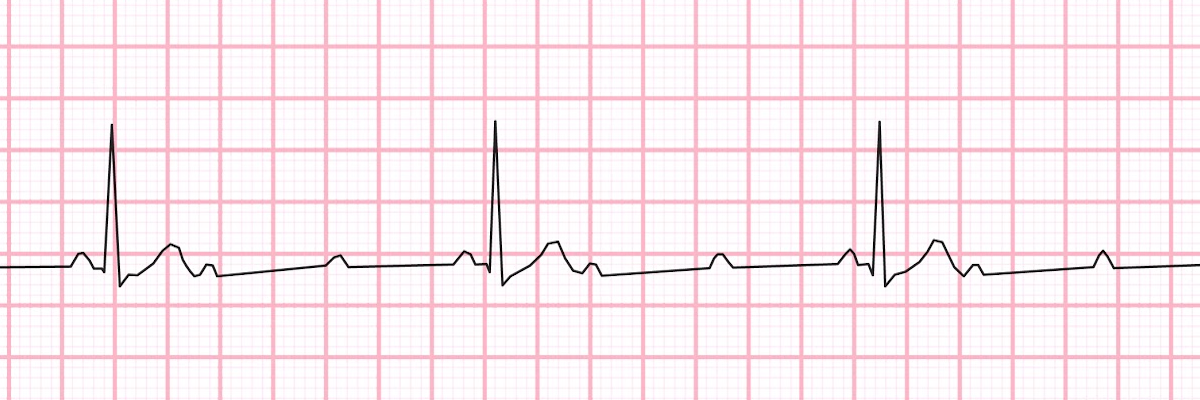
This is the "wildcard" of cardiac arrest rhythms. Any electrical activity on the monitor that is not VF or Pulseless VT, in a patient without a pulse, is classified as PEA. It could be a sinus rhythm, atrial fibrillation (AFib), or even a complete AV block (3rd-degree AV Block) -- if there is no pulse, it is PEA.
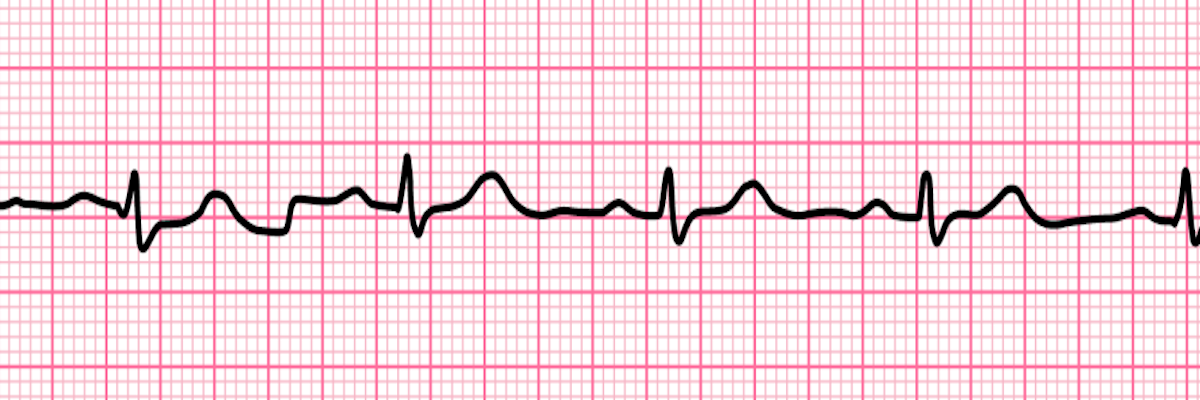
Sinus Rhythm Example

Electrical activity. If the patient is unconscious, they may be in cardiac arrest. Check the pulse -- if absent, it is PEA.
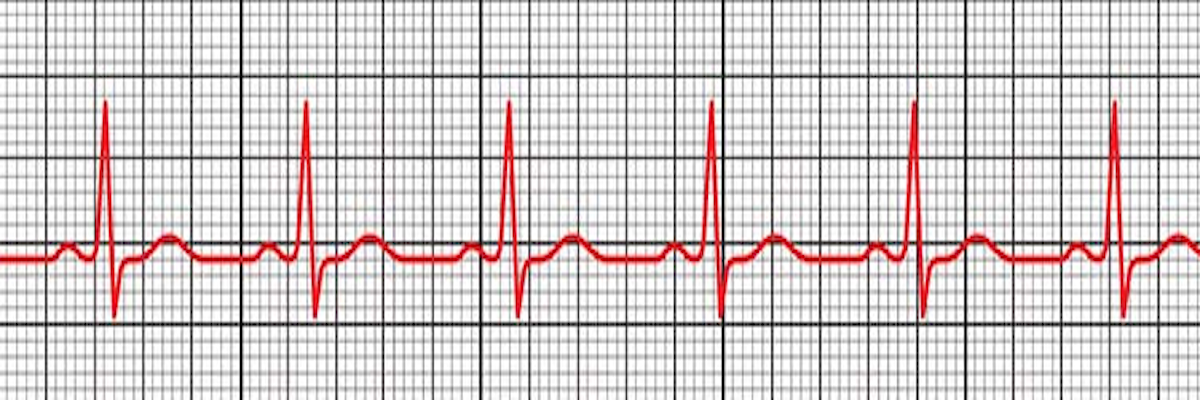
PEA

Another example of Pulseless Electrical Activity (PEA).

Both of these rhythms have electrical activity. In a cardiac arrest, if there is no pulse, the rhythm is classified as PEA.

The key here is to check the pulse. Without a pulse, the heart may generate electrical signals but does not pump blood.

Asystole

Pay extra attention here! When you see a flat line on the monitor, initially call it a "flat line" to rule out technical problems (loose cables, gain adjustment, or incorrect lead selection). If the flat line persists, the diagnosis is Asystole.
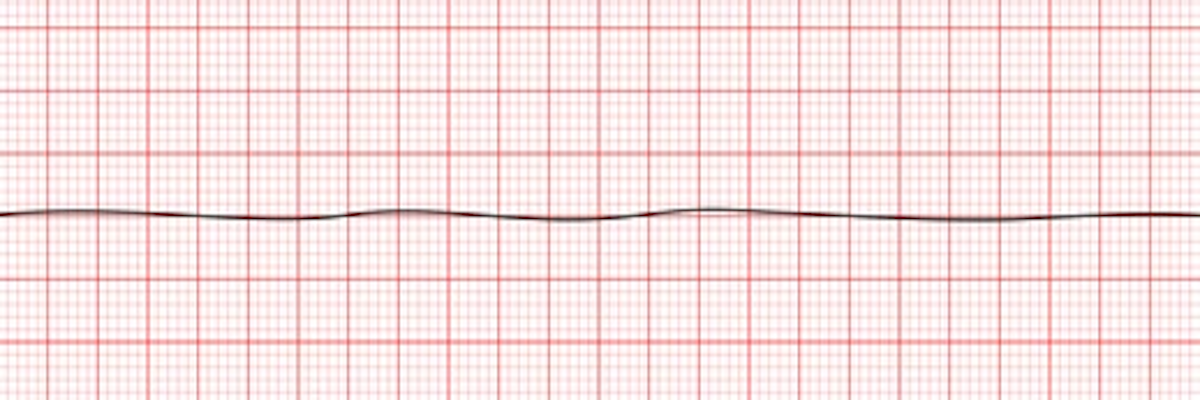
Asystole

Flat line on the monitor. Only after checking cables, gain settings, and leads can asystole be confirmed.

Practical tip: Asystole is the total absence of electrical activity -- the "silence" of the heart on the monitor.
ECG Course with Jose Alencar

ECG Course with Jose Alencar

Learn ECG with Jose Alencar

About the author

ACLS Instructor at the Dante Pazzanese Institute of Cardiology

Arrhythmia Review: Understanding Tachycardia and Bradycardia Rhythms in ACLS

Advanced Cardiovascular Life Support (ACLS) is a pillar of Medicine that empowers healthcare professionals to act in cardiac emergencies based on updated ACLS protocols, such as those from the AHA ACLS and reference institutions like Dante Pazzanese. After exploring cardiac arrest rhythms in the ACLS algorithm, it is now time to dive into arrhythmias, focusing on tachycardia and bradycardia. This content is perfect for those preparing for the ACLS course, the ACLS exam, the ACLS test, or seeking reliable material, such as an ACLS PDF, for ACLS 2025 certification. Let us learn in a didactic and practical way how to identify and differentiate these rhythms!

Tachyarrhythmias: Fast Rhythms in ACLS

Tachyarrhythmias are defined by a heart rate greater than 150 beats per minute (bpm) and are classified into two major groups:

  • Ventricular -- Originating in the ventricles, with wide QRS.
  • Supraventricular -- Utilizing the atrial and nodal conduction system, presenting narrow QRS.

To simplify, in the context of ACLS:

  • Wide QRS: Consider Ventricular Tachycardia (VT).
  • Narrow QRS: It is a Supraventricular Tachycardia (SVT).

Do not overcomplicate what the ACLS course has already simplified for you!

Ventricular Tachycardias: Wide QRS in Focus

Ventricular Tachycardia (VT) is almost always regular -- the rhythm maintains a repetitive pattern. So ask yourself: "Does the pattern repeat?"

  • Wide QRS and regular: It is VT. If the pattern repeats, then it is VT!
Ventricular Tachycardia

Wide QRS. Does the pattern repeat? Yes? Then it is VT!

If the QRS is wide but the rhythm does not repeat, it could be Polymorphic Ventricular Tachycardia or even Ventricular Fibrillation (VF). If sustained, the patient may be in cardiac arrest, requiring immediate defibrillation according to the ACLS 2025 guidelines.

Ventricular Fibrillation

Wide QRS. Does the pattern repeat? No? Then it is VF!

Supraventricular Tachycardias: Narrow QRS on Stage

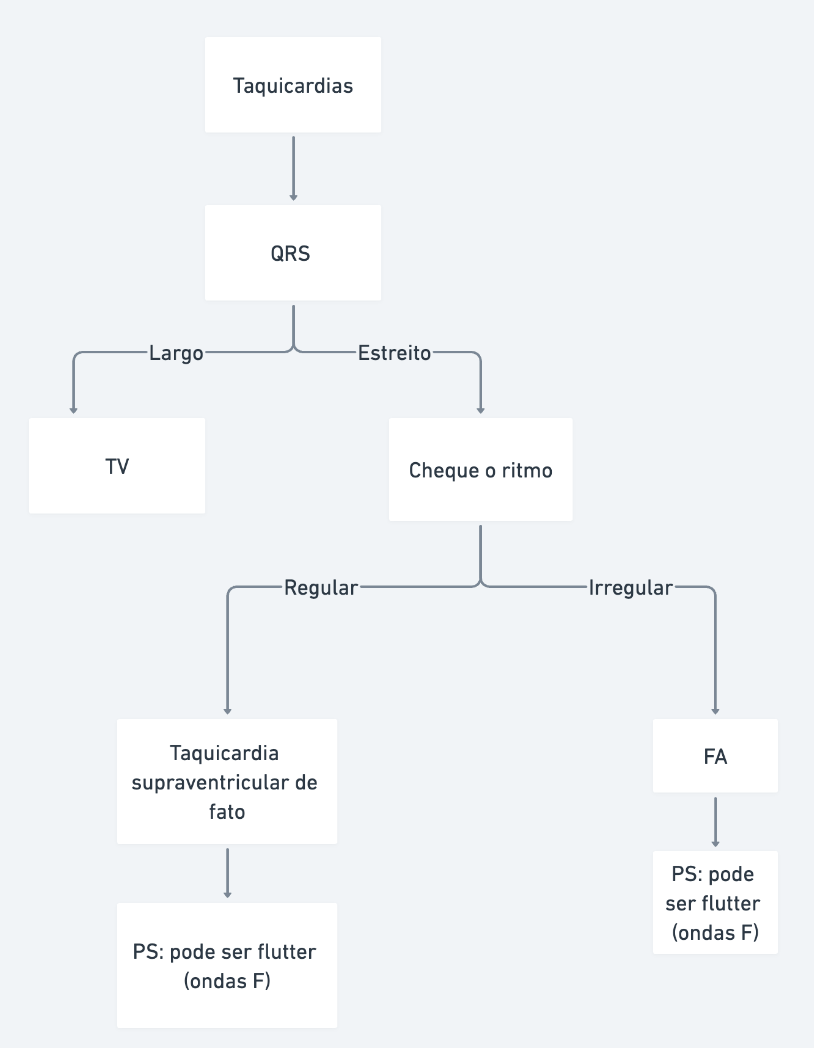
Supraventricular tachycardias (SVT) present with narrow QRS. To differentiate them, observe whether the rhythm is regular or irregular.

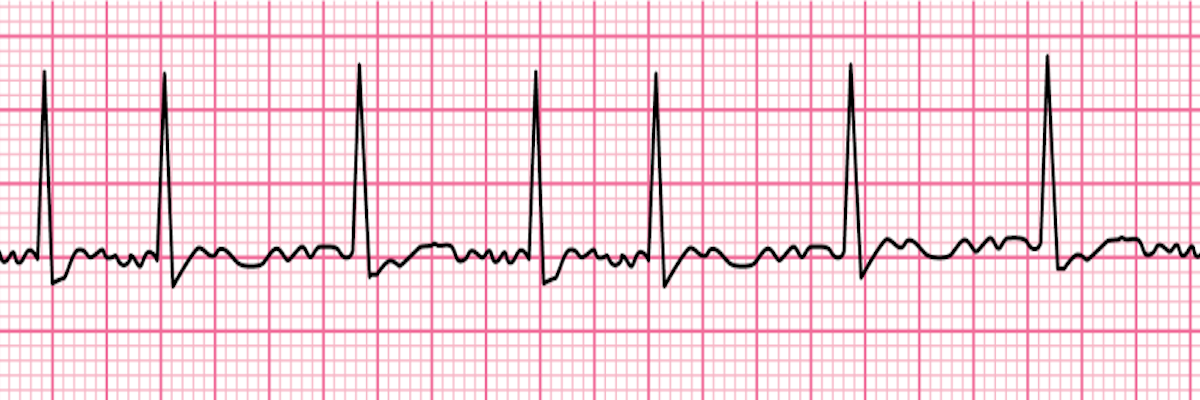
  • Irregular Rhythm: If the beats vary, it is likely Atrial Fibrillation (AFib), where the atria fibrillate and the tracing is chaotic.
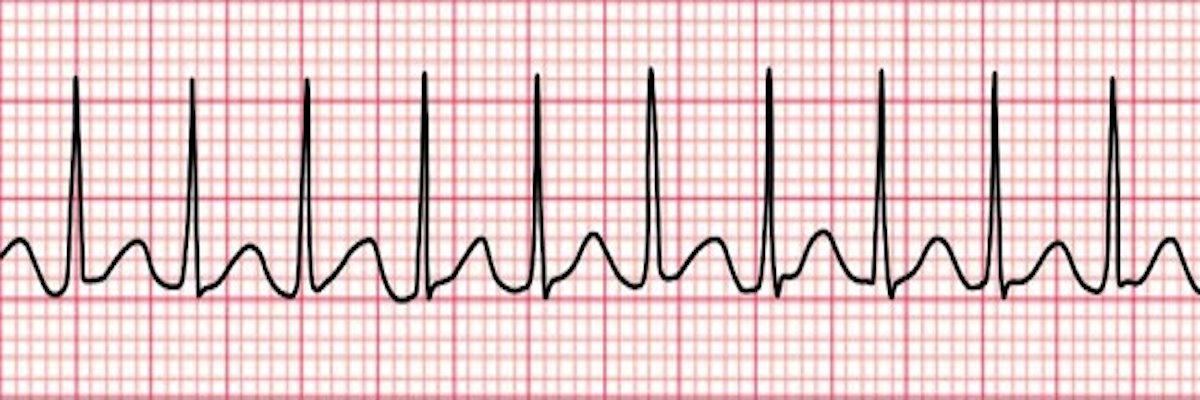
  • Regular Rhythm: If the rhythm is constant, it is a reentrant Supraventricular Tachycardia (SVT), which responds to vagal maneuvers or adenosine.
Atrial Fibrillation

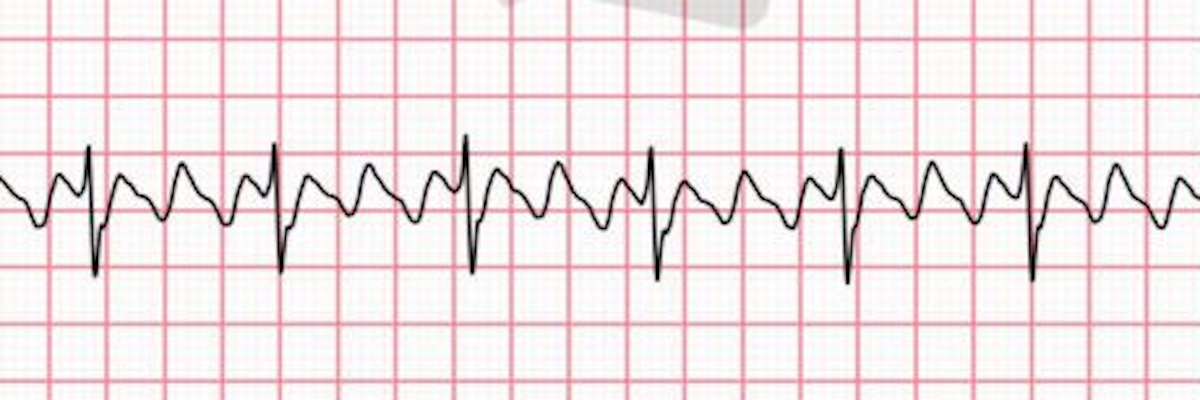
Narrow QRS and irregular rhythm: Atrial Fibrillation (AFib)

Supraventricular Tachycardia

Narrow QRS and regular rhythm -- likely SVT.

Exception: Atrial Flutter

Atrial Flutter, the "sibling" of AFib, can be regular or irregular. Its tracing shows F waves in a "sawtooth" pattern. Although it does not respond to standard SVT interventions, in practice, if identified, it can be treated as Flutter, even though many courses, such as the ACLS Dante Pazzanese, do not cover it in detail.

Atrial Flutter

Atrial Flutter -- see the sawtooth pattern? Do not worry, this is not tested on the ACLS exam.

Tachycardia Recognition Algorithm

Tachycardia Recognition Algorithm

Bradyarrhythmias: Slow Rhythms in ACLS

Bradyarrhythmias are characterized by heart rates below 60 bpm and may indicate conduction system dysfunction. In advanced life support, the focus is on identifying and treating them when there is hemodynamic instability.

Sinus Bradycardia

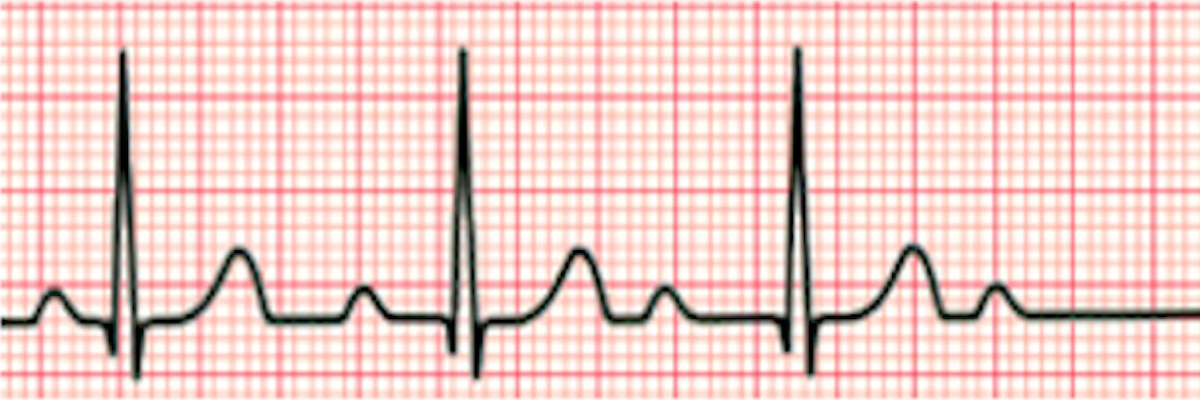
Occurs when the sinus node fires more slowly than normal, maintaining a regular rhythm with narrow QRS. Common in athletes, but can be pathological in emergencies.

Sinus Bradycardia

Sinus Bradycardia

Atrioventricular Block (AV Block)

Atrioventricular Blocks vary in severity:

  • 1st-Degree AV Block: Regular rhythm with prolonged PR interval (generally no indication for treatment in ACLS, unless there are severe symptoms).
  • 2nd-Degree AV Block (Mobitz I and II): Some P waves do not conduct to the QRS. In Mobitz I (Wenckebach), the PR interval progressively lengthens before the block; in Mobitz II, there is no prior lengthening.
Mobitz I

Atrioventricular Block -- Mobitz I. Notice the PR interval lengthening until the P wave can no longer produce a QRS.

Mobitz II

Atrioventricular Block -- Mobitz II. The PR interval gives no warning. It remains constant and suddenly blocks.

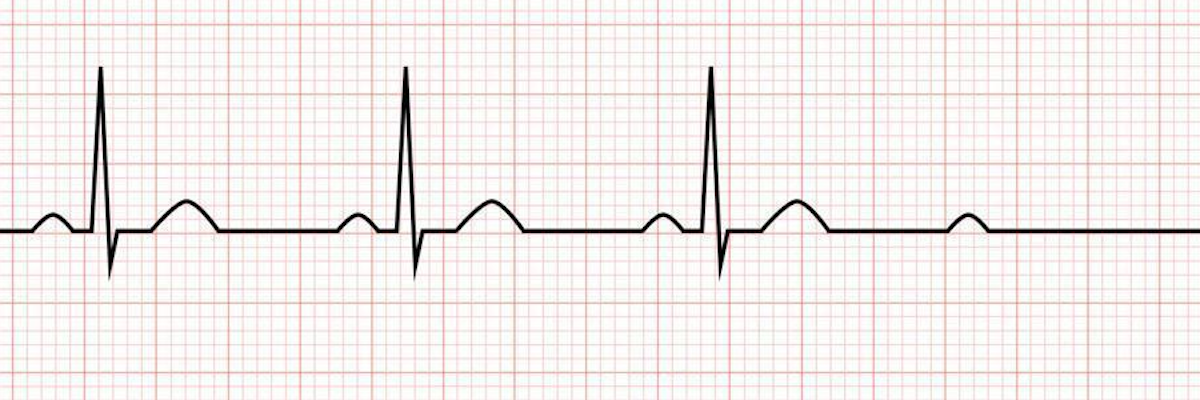
3rd-Degree AV Block (Complete AV Block): Total dissociation between atria and ventricles, with QRS that can be narrow or wide, depending on the escape rhythm.

Complete AV Block

3rd-Degree AV Block (Complete AV Block). The P wave has its own rate and the QRS has another.

A common question is how to differentiate 2nd-degree blocks from complete AV block:

  • If the QRS rhythm is regular, think of complete AV block.
  • If the rhythm is irregular, it is a 2nd-degree AV block. Then, observe whether the PR interval varies to determine if it is Mobitz I or II.
Mobitz II Verification

2nd-degree block: irregular rhythm.

Complete AV Block Verification

Complete AV Block: regular rhythm.

Key point: If the ventricular rhythm is regular, it is a complete AV block.

In the ACLS protocol, if the bradycardia causes instability (hypotension, shock), the management -- regardless of the rhythm -- includes atropine or pacemaker, according to the AHA ACLS guidelines.

Why Does This Matter in ACLS?

Mastering tachycardia rhythms (VT, VF, AFib, SVT, and Torsades de Pointes) and bradycardia is essential for the ACLS algorithm. Whether in an online or in-person setting, or at reference centers like Dante Pazzanese, recognizing these ECG patterns guides the interventions that save lives. This content was designed to be your virtual ACLS PDF, helping you review for your ACLS 2025 certification and the ACLS test.

ACLS at the Dante Pazzanese Institute

Real ACLS Training

Get real ACLS training from true experts. The Dante Pazzanese Institute of Cardiology is a world reference in Cardiology.

Learn ECG with Jose AlencarECG Course|PlantaoECG